


Case Study
The Sumburgh Helicopter Crash:
How HUET Training Saved 14 Lives
Case Study Analysis by Suraksha Marine
Case Study
1. Introduction
On 23 August 2013, a Eurocopter AS332 L2 Super Puma helicopter operating for oil‑and‑gas charterer Total crashed into the North Sea while approaching Sumburgh Airport in Shetland. The aircraft was transporting 16 offshore workers and two crew from the Borgsten Dolphin semi‑submersible drilling rig to Sumburgh for refuelling before continuing to Aberdeen.
At 17:17 UTC the helicopter struck the sea roughly 1.7 nautical miles west of Sumburgh and overturned. Four passengers died; fourteen occupants survived despite the cold water and inverted helicopter.
The accident shook the offshore industry. It was the deadliest UK offshore helicopter accident since the Cormorant Alpha tragedy in 1992 and the fifth serious North Sea helicopter incident since 2009. However, the survival of 14 out of 18 occupants (≈78 %) demonstrated the critical value of Helicopter Underwater Escape Training (HUET). Survivors later told investigators and the Fatal Accident Inquiry that their training “saved my life on that day”.
2. Setting the Scene
2.1 North Sea Helicopter Operations
The United Kingdom Continental Shelf (UKCS) has long been one of the world’s busiest offshore helicopter markets. Helicopters shuttle thousands of workers each month between mainland bases and offshore installations, often in challenging weather. According to the Civil Aviation Authority (CAA), the accident rate for UK offshore helicopter operations from 1992 to 2013 was 1.35 accidents per 100,000 flight hours, with a fatal accident rate of 0.37 per 100,000 flight hours—rates lower than the broader international civil helicopter industry. Nevertheless, the frequency of accidents between 2009 and 2013 eroded worker confidence and prompted regulatory reviews.
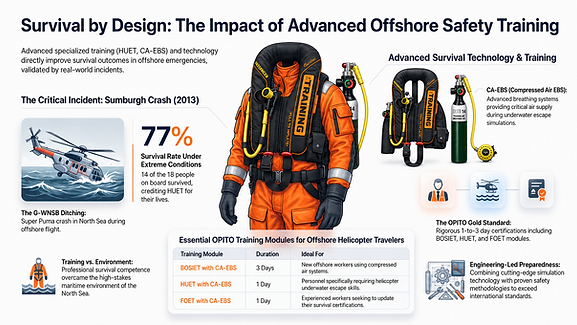
The accident helicopter, registration G‑WNSB, was a twin‑engined AS332 L2 Super Puma manufactured in 2002. The aircraft had previously operated in Norway and the Falkland Islands before being registered in the UK in April 2013. It was configured with 19 passenger seats and two pilot seats and fitted with emergency flotation systems and life‑rafts.

2.2 The Aircraft and Flight
The accident helicopter, registration G‑WNSB, was a twin‑engined AS332 L2 Super Puma manufactured in 2002. The aircraft had previously operated in Norway and the Falkland Islands before being registered in the UK in April 2013. It was configured with 19 passenger seats and two pilot seats and fitted with emergency flotation systems and life‑rafts.
On 23 August 2013, Helibus 23R departed Aberdeen at 13:44 UTC on a multi‑sector flight: first to Alwyn North platform, then to Borgsten Dolphin and finally back to Aberdeen. Due to a late manifest change, an extra passenger was added, requiring an intermediate refuelling stop at Sumburgh. After completing the first two sectors, the helicopter left Borgsten Dolphin bound for Sumburgh with 16 passengers and two crew.
Weather at Sumburgh included broken cloud at 300 ft and 2,800 m visibility. The pilots decided to conduct a non‑precision approach using the autopilot in 3‑axis mode with Vertical‑Speed (V/S), requiring the commander to manually control collective pitch (airspeed) while the co‑pilot monitored the vertical flight path.
2.3 Helicopter Safety Training for Crew and Passengers
Offshore helicopter crews are required to complete Emergency and Survival Equipment (ESE) training and HUET refresher training. The AAIB report notes that pilots undertake an initial Sea Survival course that includes HUET exercises and that they must demonstrate their ability to escape from submerged cabin simulators upright and inverted every three years. They must also demonstrate operation of emergency exits and complete annual first aid, dangerous goods and basic firefighting training. Both pilots had valid HUET certifications; the commander’s HUET was valid until April 2016 and the co‑pilot’s until July 2016.
.png)
Passengers travelling offshore are required to complete BOSIET (Basic Offshore Safety Induction and Emergency Training) or an equivalent and to wear survival suits and life jackets. All 16 passengers on this flight were oil‑and‑gas workers who had undertaken the required safety training and were wearing survival suits.

3. The People Involved
3.1 The Crew
-
Captain Martin Miglans (Commander) – A 51‑year‑old pilot with an Airline Transport Pilot Licence and over 10,500 total flight hours, including about 1,894 hours on the Super Puma L2. He had 15 years of Super Puma experience and had completed his three‑year sea survival refresher course in February 2013.
-
Alan Bell (Co‑pilot) – A 40‑year‑old pilot holding a Commercial Pilot’s Licence with over 3,000 total flight hours, but only 427 hours on the AS332 L2. He had joined CHC Scotia a year earlier and converted to the L2 in February 2013. He was Pilot Monitoring on the accident sector.
Both pilots had completed mandatory Crew Resource Management (CRM) training. However, investigators later criticised the clarity and application of their Standard Operating Procedures (SOPs) and automation management.
3.2 The Passengers
The 16 passengers represented a cross‑section of offshore professionals. They included rig workers, technicians, project staff and support personnel returning home after a shift. They were: Sarah Darnley, Gary McCrossan, Duncan Munro, George Allison, Samuel Bull, Matthew Bower, Paul Sharp and others.
Four passengers—Darnley, McCrossan, Munro and Allison—did not survive. Gary McCrossan had a pre‑existing cardiac condition and would suffer a heart attack in the liferaft. Sarah Darnley and Duncan Munro drowned after being unable to escape or after escaping and succumbing to conditions. George Allison died after sustaining a head injury that rendered him unconscious.
Among the survivors, Samuel Bull and Matthew Bower later described experiencing post‑traumatic stress disorder (PTSD) and emphasised how HUET training guided their escape. Bower told the Fatal Accident Inquiry that his offshore training “saved my life on that day”.
4. Timeline of Events
Phase 1: The Final Offshore Rotation Flight
-
On 23 August 2013, the Eurocopter AS332 L2 Super Puma departed Aberdeen at 13:44 UTC on a routine offshore passenger transfer flight. The helicopter first landed at Alwyn North at 15:25 UTC, where passengers exchanged and the co-pilot acted as Pilot Flying. Weather conditions throughout the early part of the day were favourable..
-
After departing Alwyn North at approximately 16:00 UTC, the aircraft proceeded to the Borgsten Dolphin installation. An additional passenger joined the return sector, bringing the total occupancy to 16 passengers and two crew members. At approximately 17:00 UTC, the helicopter departed Borgsten Dolphin for its final destination, Sumburgh Airport in Shetland, with the commander acting as Pilot Flying.
-
19:00 – The diesel fire pumps are switched from automatic to manual because divers are in the water. This was common practice and meant the deluge system would not automatically activate during a fire

This visual introduces the beginning of the flight sequence. Helibus 23R departed Aberdeen on a normal offshore transport mission, first routing to Alwyn North and then onward to the Borgsten Dolphin before the planned return toward shore. For the passengers and crew, the flight was part of routine North Sea offshore movement — structured, scheduled and familiar.
The learning point is that routine does not remove risk. Every offshore helicopter sector creates a fresh safety cycle: passenger briefing, manifest control, weather awareness, aircraft configuration, fuel planning and emergency readiness. Even when the first sectors are completed safely, the next sector still demands full attention.
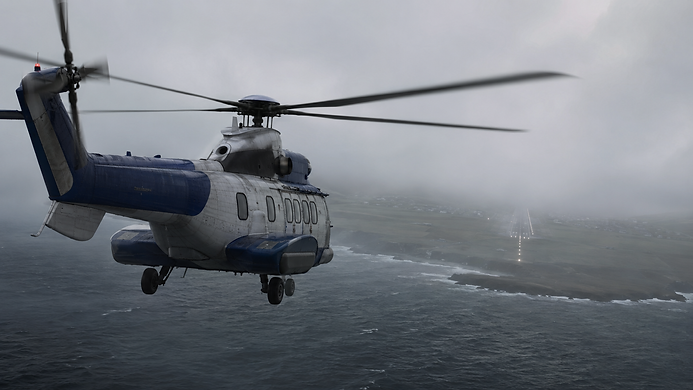
This image shows the helicopter leaving the Borgsten Dolphin and heading toward Sumburgh with 16 passengers and two crew onboard. The aircraft was no longer simply returning directly to Aberdeen; because of passenger and fuel planning requirements, the flight included an intermediate stop at Sumburgh.
For trainees, this phase highlights how small operational changes can alter flight planning. A late manifest change, an added passenger and a refuelling stop may appear routine, but they change the journey profile. Offshore workers should understand that aviation safety depends on disciplined planning, communication and situational awareness throughout every sector.
Phase 2: Approach to Sumburgh and Loss of Control
-
At 17:15:59 UTC, the co-pilot acknowledged air traffic control clearance to land at Sumburgh. Weather conditions had deteriorated significantly, with a cloud base of approximately 300 feet and visibility reduced to 2.8 kilometres.
-
The helicopter was operating on a three-axis autopilot in Vertical Speed (V/S) mode while the commander manually adjusted the collective. During the final approach, the aircraft descended through the 300-foot Minimum Descent Altitude without obtaining the required visual reference to continue the landing.
-
At approximately 17:17:30 UTC, airspeed reduced below 35 knots. The AAIB investigation later concluded that the helicopter entered a low-energy aerodynamic condition consistent with a vortex ring state, resulting in a rapid and unrecoverable loss of lift.
Phase 3: Impact with the Sea and Cabin Inversion
-
As the aircraft descended uncontrollably, the commander attempted to recover by initiating a climb while the co-pilot armed the emergency flotation system. Moments later, the helicopter struck the sea with its left side first.
-
The impact caused rapid flooding of both the cockpit and passenger cabin. Although the flotation system deployed automatically, the helicopter rolled inverted within seconds. Most occupants were unable to take a final breath before submersion, while water rushed into the cabin with extreme speed.
-
Several passengers attempted to use their Emergency Breathing Systems (EBS), but many struggled to locate or activate the mouthpiece covers in the darkness and confusion. Instead, most focused immediately on escaping the aircraft.

This visual represents the final approach toward Sumburgh in low cloud and reduced visibility. The helicopter was on approach over water, close to the destination, with the crew managing aircraft systems, descent profile, external references and landing clearance. At this stage, the aircraft was near the end of the flight, but still exposed to serious approach-phase risk.
The key learning message is that accidents can occur when the aircraft is almost home. Offshore passengers may mentally relax during the final minutes, but approach and landing remain high-workload phases. For crews, instrument monitoring, altitude awareness, automation management and clear crew coordination are critical barriers.

This image shows the moment after water impact, when the helicopter overturned and the emergency shifted from aviation control to passenger survival. Survivors had to escape from a damaged, inverted and flooded aircraft in cold North Sea conditions while using the training and survival equipment available to them.
The training lesson is direct: once a helicopter is in the water, HUET, sea survival training, survival suits, lifejackets, breath control and calm sequence-based action become the final barriers. External rescue is essential, but the first survival action must come from the people inside the aircraft.
Phase 4: Underwater Escape and Survival
-
During the first minute after impact, survivors relied heavily on skills learned during Helicopter Underwater Escape Training (HUET). Following established escape procedures, they waited for movement to stop, released their seat restraints, located exits by touch, and pushed out cabin windows to escape.
-
Four cabin windows were eventually removed after repeated attempts, creating escape routes for multiple occupants. Some survivors followed others through the same openings in near-zero visibility conditions.
-
The inverted helicopter remained afloat long enough for further survival actions. Despite suffering a head injury, the co-pilot climbed onto the overturned fuselage and manually released a liferaft from the flotation sponson. After overcoming deployment difficulties, he assisted several survivors, including the injured captain, into the raft.
-
A second liferaft was subsequently deployed, although sea conditions and swell prevented it from reaching all survivors in the water. Those who had escaped inflated their lifejackets and attempted to use spray hoods and protective equipment while awaiting rescue.

5. Critical Decisions
5.1 Autopilot Mode Selection and Monitoring
The flight crew selected 3‑axis autopilot with V/S mode for the non‑precision approach. In this mode the autopilot holds heading and attitude but leaves collective (power) control manual. The co‑pilot was tasked with monitoring the vertical flight path and acquiring external visual cues, while the commander manually managed airspeed. The procedure permitted descent to 300 ft Minimum Descent Altitude (MDA), at which point the crew should level off if no visual reference is obtained.
During the final approach the commander did not apply sufficient collective, causing airspeed to decay. Neither pilot noticed the decreasing airspeed until the helicopter was in a critically low‑energy state. Investigators concluded that the decision to use a decelerating approach in marginal weather and the failure to monitor the flight instruments were pivotal errors.
5.2 Survival Suits and Emergency Breathing Systems
Before departure from Aberdeen another pilot commented to the crew that the survival suits were uncomfortably hot. As a result, the commander suggested they not wear the suits, and the co‑pilot agreed. Although not directly causal to the crash, this decision illustrates competing priorities between comfort and safety. Passengers wore survival suits and life jackets as required.
Emergency Breathing Systems (EBS) were available, but survivors reported difficulty locating and deploying them. Most survivors instead held their breath or found pockets of trapped air, underscoring the importance of being able to escape quickly rather than relying solely on EBS.
5.3 Co‑pilot’s Action to Arm the Flotation System
In the final seconds before impact the co‑pilot armed the emergency flotation system. This action ensured the floats inflated automatically when immersed. The floats kept the helicopter afloat long enough for occupants to escape and were critical to the high survival rate.
5.4 Liferaft Deployment and Leadership after Impact
Despite a head injury, the co‑pilot climbed onto the upturned fuselage and released the liferaft manually. He assisted the injured commander and other survivors into the liferaft and then deployed a second raft. His initiative and ability to perform under stress illustrate the value of emergency drills and teamwork.
6. Technical Failures
6.1 Low‑Energy State and Vortex Ring
The AAIB concluded that the aircraft entered a low‑energy state because airspeed decayed below 35 kt. The combination of low airspeed and high rate of descent resulted in conditions consistent with vortex ring state—a flight regime where the rotor system’s own downwash recirculates through the rotor, drastically reducing lift. With only a few seconds of height remaining, recovery was impossible.
6.2 Inadequate Use of Automatic Flight Controls
Investigators noted that the operator’s Standard Operating Procedures (SOPs) did not optimise use of the helicopter’s automated systems for non‑precision approaches. The choice of 3‑axis V/S mode required more manual workload and instrument monitoring than 4‑axis modes that manage airspeed automatically. CHC later revised its manuals to prescribe 4‑axis modes for similar approaches.
6.3 Emergency Breathing System Design Issues
Survivors struggled to locate the EBS mouthpiece covers underwater. Passengers had to make a conscious decision between trying to access breathing equipment and prioritising escape. Investigators noted that some survivors reported the mouthpieces were difficult to find and open, highlighting design and training deficiencies. Category A EBS units mandated after the accident were intended to be more accessible and provide longer breathing time.
6.4 Window Exit Forces
The AAIB found that four cabin windows were removed by passengers during escape but that the force required to push out the panes was greater than in training. Some survivors needed multiple attempts, delaying their exit. This difference between training environment and real‑world escape emphasises the need for realistic simulator conditions and physical fitness.
7. Human Factors
7.1 Situational Awareness and Crew Resource Management
The crew lost situational awareness of airspeed and descent. Contributory factors included ambiguous SOPs, the commander’s expectation of being able to land despite deteriorating weather and the co‑pilot’s reluctance to challenge an experienced commander. The co‑pilot later admitted he had seen other approaches flown below the vertical profile and believed it was acceptable. The accident therefore reflects human‑factors themes: complacency, deference to authority and inadequate cross‑monitoring.
7.2 Passenger Preparedness and Behaviour
Survivors noted varying reactions among passengers. Some adopted the brace position as the helicopter descended; others were unaware of impending impact. After inversion, those who remembered HUET protocols were better able to locate exits, wait for the helicopter to stop moving, release their harnesses and escape. Matthew Bower, a chemist with limited offshore flying experience, woke up seconds before ditching yet still followed his training—removing a window and escaping without using his rebreather. He later testified that HUET training saved his life.
7.3 Psychological Aftermath
The crash had lasting psychological consequences. Survivor Samuel Bull assisted with CPR on the liferaft and later suffered severe PTSD, eventually taking his own life in 2017. Other survivors reported nightmares, anxiety and difficulties returning offshore. These outcomes underline the need for long‑term mental‑health support after traumatic incidents.
7.4 Training Realism vs Reality
Several survivors told investigators that real‑world escape was very different from training. In the AAIB report, survivors reported complete darkness, rapid flooding, cold shock and fuel‑contaminated water—conditions not fully replicated in training pools. Many could not see underwater and had to feel their way to exits. Some found that window removal required significantly more force than during HUET exercises.
These discrepancies highlight the importance of continually improving simulator realism and preparing trainees mentally for conditions beyond the pool environment.
8. Emergency Response
8.1 Search and Rescue Activation
The last clear transmission from the helicopter occurred at 17:15:59 UTC. When Sumburgh tower failed to regain radio contact, the controller attempted to call the helicopter again and then notified radar controllers. At 17:23, when it was obvious the helicopter should have landed, the tower sounded the emergency alarm. Police and maritime authorities were contacted; delays occurred due to telephone procedures.
The first search‑and‑rescue (SAR) helicopter launched at 17:31 and arrived on scene at 17:40—approximately 23 minutes after the crash. Survivors were winched from the water or liferafts, transported to Sumburgh, and then to hospital.
8.2 Lifesaving Actions by Survivors and Crew
After impact, the co‑pilot and some passengers displayed remarkable leadership. The co‑pilot armed the flotation system and, after escaping, released the liferaft and helped survivors—including the injured commander—board it. Samuel Bull and Matthew Bower attempted CPR on Gary McCrossan, who later died of heart disease. Survivors assisted one another onto the upturned fuselage and into liferafts. Those in the water inflated life jackets but had difficulty finding buddy lines and staying together.
8.3 Rescue Challenges
SAR crews faced low visibility and fuel‑covered water. The first helicopter recovered four people from the sea and returned them to Sumburgh before going back for more. The second SAR crew struggled to see the other helicopter in mist and noted the importance of high‑visibility paint schemes. Rescue was successful largely because the helicopter remained afloat long enough for survivors to escape and for SAR assets to arrive.
9. What Went Wrong
The accident was not caused by mechanical failure. Instead, the AAIB identified pilot error and procedural shortcomings:
-
Failure to monitor flight instruments: Neither pilot realised airspeed was decaying or that the helicopter descended below MDA until it was too late.
-
Non‑compliance with approach procedures: The crew failed to level off at MDA when visual references were not obtained.
-
Ambiguous Standard Operating Procedures: The operator’s SOPs did not clearly define how a 3‑axis decelerating approach should be flown, leading to inconsistent pilot techniques.
-
Inappropriate automation management: The choice of 3‑axis V/S mode in marginal weather increased workload and required close monitoring.
-
Expectation bias: The commander believed he would be able to land despite deteriorating conditions and did not adjust his strategy.
These factors combined to create a low‑energy state from which recovery was impossible. The accident underscores the importance of strict adherence to SOPs, effective crew resource management and optimum use of automated systems.

10. Investigation Findings
The Air Accidents Investigation Branch (AAIB) published its final report in 2016. Key findings included:
-
Causal factors:
-
The helicopter’s flight instruments were not monitored effectively during the latter stages of the approach.
-
Visual references were not acquired by MDA and no effective action was taken to level the aircraft.
-
-
Contributory factors:
-
The operator’s SOP for this type of approach was not clearly defined, leading to ambiguity.
-
SOPs did not optimise use of the helicopter’s automated systems during non‑precision approaches.
-
The decision to fly a 3‑axis V/S decelerating approach in marginal weather increased workload and required closer monitoring.
-
The commander’s expectation of landing despite poor weather contributed to the decision to continue descent.
-
-
Survivability analysis:
-
14 of 18 occupants survived; four fatalities resulted from drowning or pre‑existing medical conditions.
-
Most occupants could not take a breath before submersion and had difficulty locating EBS mouthpieces.
-
Four windows were removed by passengers; the force required was greater than in training.
-
Some survivors were able to find pockets of air inside the cabin.
-
-
Safety recommendations: The AAIB issued recommendations addressing rotorcraft certification, flight data monitoring, passenger pre‑flight briefings, emergency breathing systems and survivability equipment. In response, the operator and regulator undertook significant actions.
11. Industry Changes Afterward
The Sumburgh crash prompted a comprehensive review of offshore helicopter safety. In February 2014, the UK CAA published CAP 1145—a Safety Review of Offshore Public Transport Helicopter Operations. The review identified 32 CAA actions and 29 recommendations to industry and regulators to improve safety and survivability.
Key measures included:
-
Limiting flights in adverse sea conditions: Routine helicopter flights were prohibited in sea states above Sea State 6, and operators were required to arm emergency flotation systems for all over‑water departures and arrivals.
-
Enhancing emergency breathing systems: Occupation of seats not adjacent to an emergency exit was prohibited unless passengers were provided with enhanced “Category A” EBS. By April 2016 (later advanced to January 2015) all offshore helicopters had to be fitted with side‑floating systems or Category A EBS for all occupants.
-
Restricting passenger size: From April 2015 passengers too large to fit through push‑out window exits could not travel offshore.
-
Establishing an Offshore Operations Safety Forum: The CAA created a forum to promote continuous safety improvements.
-
Improving flight data monitoring: Operators were required to implement Helicopter Flight Data Monitoring (HFDM) programmes to detect deviations from stabilised approach criteria and other risk indicators.
-
Enhancing helideck standards and communication procedures: Measures targeted helideck lighting, communications and rescue coordination.
The CAA’s progress reports note that by 2019 the majority of CAP 1145 recommendations had been implemented, improving survivability and safety culture across the UKCS. Many of these measures—such as Category A EBS and restrictions on seat adjacency—were adopted internationally.
The accident also accelerated the formation of HeliOffshore, an industry association focused on improving offshore helicopter safety through collaborative data sharing, technology upgrades and global standardisation. Operators improved training realism by incorporating dark‑water simulations, multi‑axis HUET simulators and compressed air breathing systems into courses.
%20(1).png)
12. Modern Training Lessons
12.1 HUET and Sea Survival Training
The Sumburgh accident underscores that HUET training is not optional; it is lifesaving. Survivors credited HUET for giving them the mental script to follow when the helicopter inverted. Mr Bower’s testimony—“It saved my life on that day”—is echoed in many accounts. Without HUET, panic can overwhelm rational thought, and precious seconds are lost.
Modern HUET programmes now incorporate lessons from Sumburgh:
-
Enhanced Realism – Simulators have improved rotation capability (180° inversion), variable lighting, cold water and debris to replicate actual conditions. Trainees practice escaping in complete darkness and feel for exits rather than seeing them.
-
Emergency Breathing Systems – Courses now emphasise Category A EBS, which provide a longer air supply and are easier to deploy. Students practice locating and operating the mouthpiece underwater.
-
Window Removal and Muscle Memory – Training emphasises the amount of force required to push out windows and encourages repeated practice to build muscle memory.
-
Life‑raft Deployment – Students learn manual liferaft deployment and painter‑line management, simulating scenarios where automatic deployment fails.
-
Teamwork and Leadership – HUET now includes scenarios where trainees must assist others, reflecting the cooperative actions of survivors and the co‑pilot during Sumburgh.
12.2 BOSIET and FOET Evolution
BOSIET (Basic Offshore Safety Induction and Emergency Training) and its refresher FOET (Further Offshore Emergency Training) have evolved to incorporate the Sumburgh lessons.
Courses emphasise:
-
Situational Awareness – Recognising cues of a developing emergency (e.g., sudden descent or power changes) and adopting brace positions even when not instructed.
-
Breath Control and Calmness – Practising breath‑hold techniques and mental control to delay panic when submerged.
-
Egress Sequencing – Waiting for movement to stop, releasing harness, orienting by feel and using alternative exits when primary ones are jammed.
-
Cold‑Water Immersion – Understanding the physiological effects of cold shock and practising steps to mitigate them.
12.3 Crew Resource Management and Automation Use
Crew training now emphasises consistent application of SOPs, effective monitoring of flight instruments, and appropriate automation management. Operators updated manuals to prescribe 4‑axis autopilot modes during non‑precision approaches and to mandate cross‑checks at key altitudes. CRM courses stress assertiveness and challenge culture so that co‑pilots will question or call out deviations.
12.4 Mental Health Support
The death of survivor Sam Bull from PTSD-related suicide highlights the need for post‑incident support. Offshore operators now provide counselling services and mental‑health programmes for survivors of accidents. Training courses address psychological resilience and encourage participants to seek help early.
13. What Today’s Offshore Workers Must Learn
-
Treat Safety Training Seriously – HUET and BOSIET are not mere formalities. They instil muscle memory that will surface under extreme stress. Commit fully during training and ask questions.
-
Stay Alert and Follow Procedures – Even experienced pilots can make mistakes. As a passenger, pay attention to safety briefings, know where exits are, listen for unusual changes in engine noise or flight path, and adopt brace positions if there are signs of impact.
-
Remain Calm and Methodical Underwater – Panic is natural but deadly. Remember the HUET sequence: wait for motion to stop, release your harness, locate the window by feel, push out, then exit while holding onto a reference point.
-
Do Not Rely Solely on EBS – Practice breath control and escape procedures. Use EBS if accessible, but focus on getting out of the helicopter quickly.
-
Assist Others When Possible – Teamwork increases survival. Help others release seatbelts, remove windows or board liferafts. Instructors emphasise buddy systems for a reason.
-
Maintain Safety Mindset Off Duty – Many accidents involve complacency or procedural drift. Remain vigilant about seat belt usage, life jacket fit, and exit orientation every flight.
-
Advocate for Realistic Training – If your training facility’s HUET does not simulate darkness, cold water or window force, raise this with instructors. Demand training that reflects actual conditions.
-
Look After Mental Health – After any incident or near‑miss, seek support. Talk to supervisors and mental‑health professionals. Trauma can manifest later; addressing it early is vital.
14. Suraksha Marine Courses and How They Fit the Case Study
Modern offshore safety programmes must not only recount past accidents but translate them into actionable training. Suraksha Marine, an OPITO‑approved training provider, offers a suite of courses—BOSIET, Tropical BOSIET (T‑BOSIET), HUET with CA‑EBS, FOET with CA‑EBS and Offshore Emergency Response Team Member (OERTM)—that embody the lessons from the Sumburgh crash. This section explains each course’s objectives, mandatory units and how they address the failures identified in the accident investigation.
14.1 BOSIET with EBS and BOSIET with CA‑EBS
The Basic Offshore Safety Induction and Emergency Training (BOSIET) is the starting point for anyone travelling offshore. Suraksha Marine offers two variants: one using a traditional Emergency Breathing System (EBS) and another using a Compressed‑Air Emergency Breathing System (CA‑EBS). The course aims to acquaint learners with offshore hazards, industry safety regulations and the actions required in major emergencies. To achieve certification, participants must complete four mandatory units—Safety Induction, Sea Survival & Emergency First Aid, Fire Fighting & Self Rescue and Helicopter Safety & Escape (with EBS or CA‑EBS).
These units tie directly to Sumburgh. The Safety Induction teaches permit‑to‑work discipline, risk assessment and communications, emphasising that small oversights—like failing to monitor airspeed or comply with approach procedures—can lead to disaster. Trainees learn to challenge deviations from Standard Operating Procedures (SOPs) and to understand the rationale behind safety rules. The Sea Survival & Emergency First Aid module covers the physiological effects of cold water, life‑jacket deployment and group survival techniques; it reflects the actions of the co‑pilot and survivors who deployed liferafts and looked after each other.
The Fire Fighting & Self Rescue unit emphasises the use of breathing apparatus and escape in smoke‑filled or submerged environments, paralleling the difficulty survivors had locating EBS mouthpieces and pushing out windows. Finally, the Helicopter Safety & Escape module trains participants to brace correctly, identify exits, wait for motion to stop, release harnesses, push out windows and escape—even when the aircraft is inverted. Learners practise using EBS or CA‑EBS; the latter provides a longer and more reliable air supply, reflecting changes introduced after the crash.
14.2 Tropical BOSIET (T‑BOSIET)
For personnel working in warmer climates, Suraksha Marine provides T‑BOSIET, which adapts the standard BOSIET to tropical conditions. The four mandatory units remain the same. While the Sumburgh accident occurred in cold water, the underlying principles—hazard identification, emergency response, escape techniques and first aid—are universal. T‑BOSIET emphasises heat stress and dehydration, as well as differences in sea survival in warmer waters. The course still prepares trainees to escape from helicopters and to assist others, building on Sumburgh’s lessons about teamwork and leadership.
14.3 Further Offshore Emergency Training (FOET) with CA‑EBS
Experienced offshore workers must refresh their skills every four years. Suraksha Marine’s FOET with CA‑EBS recertification course focuses on practising helicopter escape with CA‑EBS, firefighting, self‑rescue and emergency first aid. Learners revisit the fundamentals of BOSIET but under more challenging scenarios: they practise dark‑water egress, liferaft deployment, casualty care and leadership under pressure. FOET addresses the phenomenon of procedural drift—gradual deviations from established procedures—that contributed to the Sumburgh crash. Refresher training reinforces muscle memory and ensures that complacency does not creep in.
14.4 Helicopter Underwater Escape Training (HUET) with CA‑EBS
The HUET with CA‑EBS programme is critical for frequent flyers. The course objective is to ensure that passengers and crew can use safety equipment and follow procedures during helicopter emergencies. The single mandatory unit, Helicopter Safety & Escape (CA‑EBS), requires participants to escape from a submerged helicopter simulator while breathing from a compressed‑air device. Training emphasises orientation, breath control, harness release, window removal and teamwork. Realistic simulations incorporate inversion, cold water, darkness and obstructions—conditions survivors faced at Sumburgh when they had to locate windows by feel and push them out under pressure. HUET encourages individuals to remain calm, follow the sequence and help others, echoing the co‑pilot’s actions in deploying liferafts and aiding injured colleagues.
14.5 Offshore Emergency Response Team Member (OERTM) Initial Training
Suraksha Marine’s OERTM course prepares selected personnel to become members of offshore emergency response teams. The programme comprises units on The Role of the Offshore Emergency Response Team Member, Incident Response and Practical Exercises for the OERTM. Trainees learn to assess situations, communicate effectively, lead firefighting and rescue operations, and coordinate with external services. In the context of Sumburgh, OERTM training equips individuals to act decisively—whether that means arming flotation systems, deploying liferafts or assisting injured passengers. The course emphasises leadership, situational awareness and team dynamics, all of which were critical to the survival of 14 occupants.
14.6 Integration of Suraksha Marine Courses with Sumburgh Lessons
Collectively, these courses reinforce the themes highlighted in this case study. They teach hazard awareness, situational monitoring, automation management, escape techniques, first aid, teamwork and leadership. By practising realistic scenarios that include cold water, disorientation, equipment malfunctions and communication breakdowns, trainees build the muscle memory and mental resilience that saved lives on the day of the Sumburgh crash. The courses also embed regulatory updates introduced after the accident—such as the requirement for Category A EBS, seat adjacency restrictions and enhanced flight data monitoring
15. Trainer Discussion Questions
-
Automation Management – Why is it important to use appropriate autopilot modes during instrument approaches? How should crews decide between 3‑axis and 4‑axis modes?
-
Monitoring and Challenge Culture – What can co‑pilots do if they notice deviations from procedures but are reluctant to challenge more experienced captains? Discuss strategies to foster assertive communication.
-
HUET Realism – Based on survivor feedback, what additional elements should HUET training include? How can training providers balance safety with realism?
-
Survivor Actions – Which actions taken by survivors and crew after impact were most effective? How can trainees practise these skills?
-
Emergency Breathing Systems – When should EBS be used? Discuss the pros and cons of focusing on EBS versus immediate egress.
-
Life‑raft Management – What challenges did survivors face deploying life‑rafts and managing painter lines? How can training address these challenges?
-
Post‑Incident Support – How should companies support survivors psychologically? Discuss the importance of trauma counselling and long‑term monitoring.
-
Regulatory Changes – What are the key measures introduced by CAP 1145? How have these measures improved offshore helicopter safety? Are there areas where further regulation is needed?
16. Key Takeaways
-
Human error, not mechanical failure, caused the Sumburgh crash. Pilots failed to monitor airspeed and follow approach procedures.
-
HUET saves lives. 14 of 18 occupants survived because they remembered and executed escape procedures. Survivors testified that HUET training “saved my life”.
-
Realism matters. Survivors experienced darkness, cold, debris and difficult window removal—conditions not always replicated in training. Training programmes must evolve to match real‑world challenges.
-
Equipment matters. The co‑pilot’s arming of the flotation system and release of liferafts were critical to survival. Category A EBS and side‑floating systems mandated after the accident enhance survivability.
-
Procedures and Culture. Clear SOPs, appropriate automation use and assertive crew communication are essential. Operators revised manuals, improved CRM training and introduced HFDM to detect deviations.
-
Regulatory Improvements. The CAA’s CAP 1145 introduced restrictions on operations in high sea states, enhanced EBS requirements, passenger‑size restrictions and a collaborative safety forum. These changes have improved North Sea helicopter safety.
-
Mental Health. Trauma does not end with rescue. Survivors may experience PTSD and require ongoing support.
The Sumburgh tragedy reminds us that even routine flights can turn catastrophic if procedures drift and vigilance lapses. Yet it also shows that rigorous training and swift action can turn disaster into survival. For offshore workers and trainers, the lessons are clear: embrace safety culture, insist on realistic training, respect procedures and support one another—from the cockpit to the classroom and beyond.
.png)
Conclusion:
The Sumburgh helicopter crash stands as undeniable proof that professional offshore safety training saves lives. In the space of just minutes, 14 people faced the ultimate test of their emergency training—and their training didn't fail them. The skills they learned in HUET courses, practiced in controlled environments, and committed to muscle memory became the difference between seeing their families again and becoming another offshore tragedy.
Martin Tosh's survival testimony encapsulates the training's value:
"I was on my last breaths when a flash of my family got me through. That got me out of the helicopter." His training gave him the calm confidence to find that crucial extra second, that vital breath, that desperate handhold that meant survival.
At Suraksha Marine, we understand that offshore safety training isn't just about meeting regulatory requirements—it's about ensuring that every person who travels to offshore installations has the best possible chance of returning home safely.
The Sumburgh survivors are living proof that when emergencies strike, proper training transforms panic into purposeful action, confusion into clarity, and potential tragedy into survival success stories.When you choose Suraksha Marine's OPITO-approved training, you're not just earning a certification. You're investing in the same life-saving skills that brought 14 people safely through their worst nightmare and back to their families. In the unforgiving environment of offshore operations, there's no substitute for the best training available.Your life may depend on it—just ask the Sumburgh survivors.
Contact Suraksha Marine today to enroll in our comprehensive HUET, BOSIET, and offshore safety training programs. Because when seconds count, training makes all the difference.