


What Is BOSIET? A Complete Guide for Offshore Workers

The First Helicopter Ride Offshore
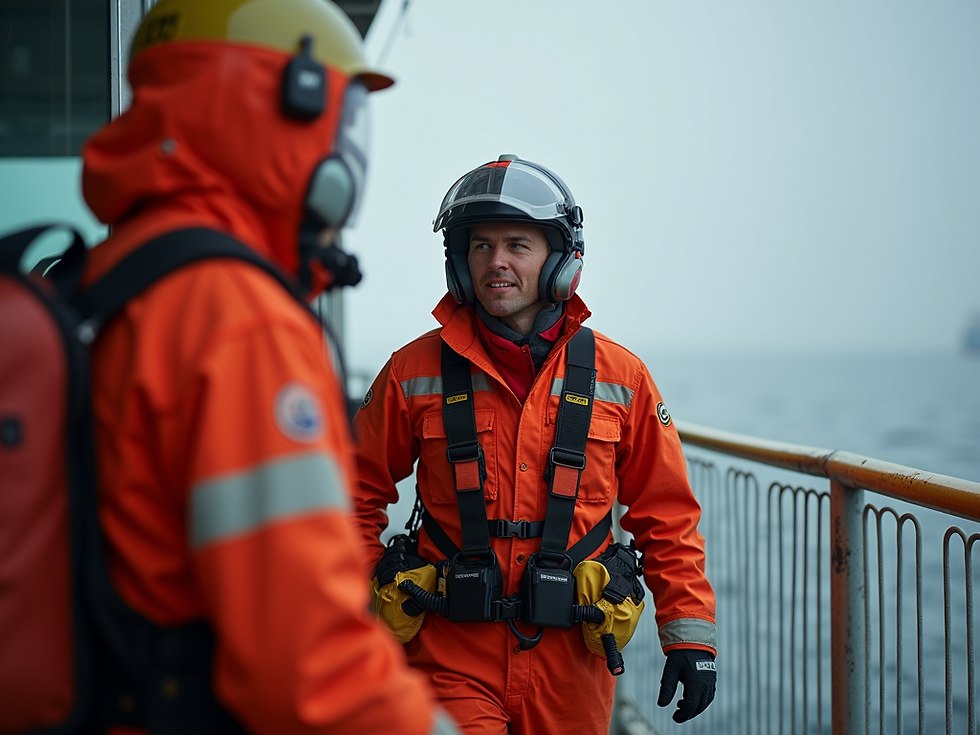
The first offshore trip often begins quietly. A trainee worker stands at the heliport wearing coveralls, safety boots, a lifejacket, emergency breathing system and a survival suit. The helicopter is nearby. The noise is heavy. The briefing is short but serious: seatbelts, emergency exits, brace position.
Do not inflate the lifejacket inside the aircraft. Know your nearest exit. Know your secondary exit. Listen to the crew.
For someone new to offshore work, this is the moment when the job becomes real.
Until then, "offshore" may have sounded like opportunity — better pay, global exposure, technical growth, oil and gas projects, offshore wind, marine logistics, subsea work, or platform operations. But before anyone reaches the platform, they must first understand something more fundamental:
Offshore work is not just a remote workspace. It is high-consequence work.
You are away from shore. Weather can change quickly. Rescue may take time. Helicopter travel carries its own emergency procedures. Fire, smoke, water survival, alarms, muster points, liferafts, and evacuation routes are not theory.
They are part of the working environment.
That is why BOSIET exists.
What is BOSIET?
BOSIET stands for Basic Offshore Safety Induction and Emergency Training.
It is an OPITO-approved offshore safety course for personnel who are new or returning to offshore work. BOSIET teaches offshore safety awareness, helicopter underwater escape, emergency breathing system use, sea survival, firefighting, self-rescue, and basic first aid.

It is required for workers travelling by helicopter to offshore oil and gas installations, vessels, FPSOs, drilling rigs, offshore construction projects, and offshore wind environments. The BOSIET certificate is valid for four years, after which workers must renew through FOET (Further Offshore Emergency Training).
Why BOSIET Matters More Than Ever in India
India's offshore energy industry is experiencing significant growth. As one of the world's fastest-growing economies, India's demand for energy continues to increase, driving investments in offshore oil and gas exploration, production facilities, subsea infrastructure, and renewable energy projects.
According to projections from the International Energy Agency (IEA), India is expected to account for a substantial share of global energy demand growth over the coming decade.
To meet these requirements, offshore operators continue expanding operations in regions such as:
Mumbai High
Krishna-Godavari Basin
Cauvery Basin
Arabian Sea offshore fields
Bay of Bengal offshore projects
As offshore activities increase, international companies and contractors are placing greater emphasis on workforce safety and competence. Offshore environments present unique hazards that cannot be compared to conventional workplaces on land. Workers may spend weeks offshore, travel by helicopter, operate in harsh weather conditions, and work in isolated locations where immediate emergency assistance may not be available.
This is why BOSIET has become one of the most important qualifications for offshore personnel.
Employers increasingly seek workers who understand:
Offshore safety procedures
Emergency evacuation systems
Helicopter transportation protocols
Fire prevention and response
Sea survival techniques
Personal responsibility during emergencies
BOSIET provides this critical foundation and helps ensure that offshore personnel can contribute to a safer working environment from day one.
Historical Background: Why Offshore Training Became Non-Negotiable
Offshore safety training was shaped by decades of hard, painful lessons. Major offshore disasters demonstrated that technical systems alone are never enough.
Equipment can fail, communications can break down, weather can worsen, and escape routes can become blocked. Workers who have never practised emergency procedures before need further comphrehensive training to reduce unnecessary panic that cost lives — their own and others'.
The offshore industry learned that survival depends on interlocking layers of protection: engineering controls, safe operating procedures, emergency response planning, competent supervision, clear communication, worker training, repeated drills, and strong safety culture. BOSIET grew from the industry's need for a standardised, internationally recognised baseline — ensuring that before anyone steps offshore, they have experienced controlled emergency scenarios in a safe training environment.
The aim was always clear: your first exposure to a helicopter ditching or a simulated sea abandonment should happen in a training pool, not in a real emergency.
Industry Statistics Every Offshore Worker Should Know
OPITO BOSIET with EBS comprises four mandatory units and 21 guided learning hours, with approximately 40% theory and 60% practical content.
BOSIET certification is valid for four years, after which FOET refresher training is required.
OPITO has over 240 approved training centres worldwide, demonstrating the global scale and acceptance of this standard.
OPITO brings over 50 years of global expertise to offshore safety standards, with BOSIET certification recognised across international operators.
IOGP's 2024 data recorded 32 fatalities in 21 incidents, reinforcing the need for life-saving controls and emergency preparedness.
India's coastline of 7,600 km and significant offshore wind potential off Gujarat and Tamil Nadu signals growing demand for safety-ready offshore workers in the years ahead.
In 2026, OPITO BOSIET remains the core requirement for personnel travelling offshore by helicopter in the UK and internationally.
These figures make one thing clear: offshore safety training is not administrative paperwork. It is part of how the industry keeps people alive.
BOSIET is an internationally recognized offshore safety training program developed under OPITO standards and designed for offshore personnel. The course combines classroom instruction with practical exercises that simulate real offshore emergency situations.
Rather than focusing solely on theory, BOSIET emphasizes hands-on learning and practical competence. Participants experience realistic emergency scenarios that help build confidence and preparedness before entering an offshore workplace.
The training focuses on four key areas:
Offshore Safety Induction
Sea Survival and Emergency First Aid
Firefighting and Self-Rescue
Helicopter Safety and Escape
Together, these modules provide a comprehensive introduction to offshore safety and emergency preparedness.
Where BOSIET becomes Crucial?
Working offshore is fundamentally different from working onshore.
Unlike traditional workplaces where emergency services may be minutes away, offshore installations are often located hundreds of kilometers from the nearest coastline. In emergency situations, personnel may need to rely on their training, equipment, and teamwork until professional rescue services arrive.
Offshore workers face a variety of potential hazards, including:
Fire and explosions
Helicopter emergencies
Severe weather conditions
Equipment failures
Medical emergencies
Evacuation scenarios
Man-overboard incidents
Confined spaces
Marine hazards
BOSIET prepares workers to recognize these risks and respond appropriately.
For employers, BOSIET helps reduce operational risk by ensuring personnel possess a consistent baseline level of offshore safety knowledge.
For workers, it improves confidence, employability, and readiness for offshore assignments.
Who Should Take BOSIET?
BOSIET is suitable for a wide range of offshore professionals.
Typical participants include:
Offshore oil and gas workers
Drilling personnel
Production technicians
Mechanical technicians
Electrical technicians
Instrumentation engineers
Offshore wind technicians
Marine crew members
Logistics personnel
Offshore construction workers
Subsea specialists
ROV operators
Inspection personnel
Contractors and consultants
Offshore project managers
Rig Managers
Maintenance teams
Service engineers
Even personnel who spend limited time offshore may be required to complete BOSIET if their role involves helicopter transportation or access to offshore installations.
If your employer requires offshore deployment, there is a strong possibility that BOSIET certification will be mandatory.
What Does the 3-Day BOSIET Course Cover?
Technical Explanation: What BOSIET Includes
A BOSIET course combines knowledge, practical training, and the experience of performing emergency actions under controlled stress. While the exact schedule depends on the OPITO standard version and delivery format, every programme covers these core areas.
1. Safety Induction
The safety induction introduces learners to how offshore installations operate and why safety discipline is strict.
Topics typically include:
Offshore installation types and platform layout
Permit-to-work systems and restricted areas
Personal protective equipment (PPE) requirements
Safety signs, alarms, and muster points
Emergency shutdown awareness
Incident reporting and stop-work authority
Environmental protection and waste management
Key Regulation applicable to offshore work and working environment
Human factors, behaviour, and worker responsibilities
For new workers, this matters because offshore life has a completely different rhythm from shore-based employment. You cannot simply walk off the site. You cannot rely on outside emergency services arriving quickly. You must know the platform's systems and follow the chain of command from the moment you arrive.
Practical meaning: If an alarm sounds offshore, you should not be confused about where to go. If your supervisor says "muster," you should know exactly what that means. If you are unsure about a task, you should already understand the key factors of proceeding to a sucessful evacuation. That mindset begins in the induction.
2. Helicopter Safety and HUET
HUET stands for Helicopter Underwater Escape Training — and for many offshore workers, it is the most memorable part of their BOSIET experience.
BOSIET introduces workers to:
Pre-flight safety briefings and helicopter boarding procedures
Seatbelt use, brace positions, and emergency exit awareness
Lifejacket rules — critically, do not inflate inside the aircraft
Ditching procedures and underwater escape
Emergency breathing system use
Surface survival after exit
The most challenging part is the underwater escape simulator. The trainee sits inside a simulated helicopter cabin. The cabin enters the water. It may topple or capsize. The learner must stay calm, locate the exit, release the harness at the correct moment, and escape.

This is not done to frighten. It is done to create controlled familiarity.
In a real emergency, disorientation is one of the most dangerous factors — water, noise, bubbles, darkness, and physical stress make even simple actions difficult. Training gives the body and mind a reference point before it ever needs one.
3. Emergency Breathing System (EBS and CA-EBS)
An Emergency Breathing System is used during offshore helicopter travel to support escape after ditching. OPITO's BOSIET with EBS is designed for workers who may be supplied with a rebreather EBS during offshore helicopter travel.
Some offshore regions and operators require CA-EBS — Compressed Air Emergency Breathing System — which uses compressed air rather than a rebreather.
The worker must know:
When to deploy the system
How to breathe from it correctly
What it feels like under physical and psychological stress
How to combine its use with seatbelt release, exit location, and escape

The equipment is only useful when the worker can use it correctly under pressure. That is why practical training — not just a safety video — is essential.
4. Sea Survival & First Aid Training
Sea survival prepares offshore workers for abandonment, evacuation, or post-ditching survival at sea. Even a trained worker can become cold, exhausted, disoriented, or separated from the group. Survival improves dramatically with preparation.
Learners are introduced to:
Correct lifejacket use and immersion suit awareness
Liferaft boarding and survival positions
Group formations for heat conservation
Hypothermia awareness and signs - (First Aid awareness)
Rescue signals and helicopter rescue awareness
Helping others without becoming a second casualty - (First Aid awareness)
Practical example: A helicopter ditches midway to an offshore installation. Several workers escape into the water. The danger does not end when they reach the surface. They must stay together, avoid wasting energy, remain visible, follow instructions, and board survival equipment correctly. BOSIET builds those behaviours before they are ever needed.
Offshore first aid matters because medical support may not be immediately available.
BOSIET gives workers foundational emergency first aid awareness:
Scene safety assessment and raising the alarm
Initial casualty assessment (airway, breathing, circulation)
Bleeding control, shock awareness, and burns awareness
CPR awareness
Clear communication with medics and casualty handover
The goal is not to replace trained medics. The goal is to ensure that workers nearby can take sensible, effective first actions while help is on its way.
5. Firefighting and Self-Rescue
Fire offshore is a serious hazard because installations contain fuel sources, electrical systems, machinery, confined spaces, and limited escape routes.
BOSIET does not train every worker to become a firefighter — but it does train every worker to make the right decisions in the first moments.
Topics include:
Fire triangle, fire classes, and portable extinguisher types
Alarm activation and evacuation decisions
Smoke movement, low-level escape, and door-check procedures
Self-rescue through smoke and reduced visibility
Recognising when not to fight a fire

The key lesson is judgement. A small, contained fire may be manageable with the right extinguisher and the right technique. A spreading fire, heavy smoke, an unknown source, or an unsafe escape route means one thing: alarm and evacuation.
Why Helicopter Safety Is a Major Part of BOSIET
For many offshore workers, the helicopter journey is the first stage of every offshore assignment.

Although helicopter transportation is highly regulated and maintains excellent safety standards, offshore personnel must still be prepared for emergency situations.
Helicopter safety training focuses on:
Passenger awareness
Emergency preparedness
Escape procedures
Survival techniques
Equipment familiarity
Participants learn how to remain calm and follow established procedures during emergencies.
One of the most important practical exercises involves simulated underwater escape training.
This exercise teaches participants how to:
Maintain orientation underwater
Locate exits
Release seat restraints
Exit safely from a submerged aircraft simulator
These skills can significantly improve survival outcomes during rare but critical emergency situations.
BOSIET with EBS vs BOSIET with CA-EBS
Many offshore workers are unsure which BOSIET course variant they require.
The answer usually depends on employer requirements and operational specifications.
BOSIET with EBS
EBS stands for Emergency Breathing System.
This course includes training in the use of emergency breathing equipment designed to provide temporary breathing support during helicopter escape scenarios.

Personnel learn:
Equipment operation
Emergency procedures
Escape techniques
Practical underwater exercises
Many offshore operators require EBS training as part of their safety standards.
BOSIET with CA-EBS
CA-EBS stands for Compressed Air Emergency Breathing System.
This system uses compressed air technology and may be specified by particular offshore operators.
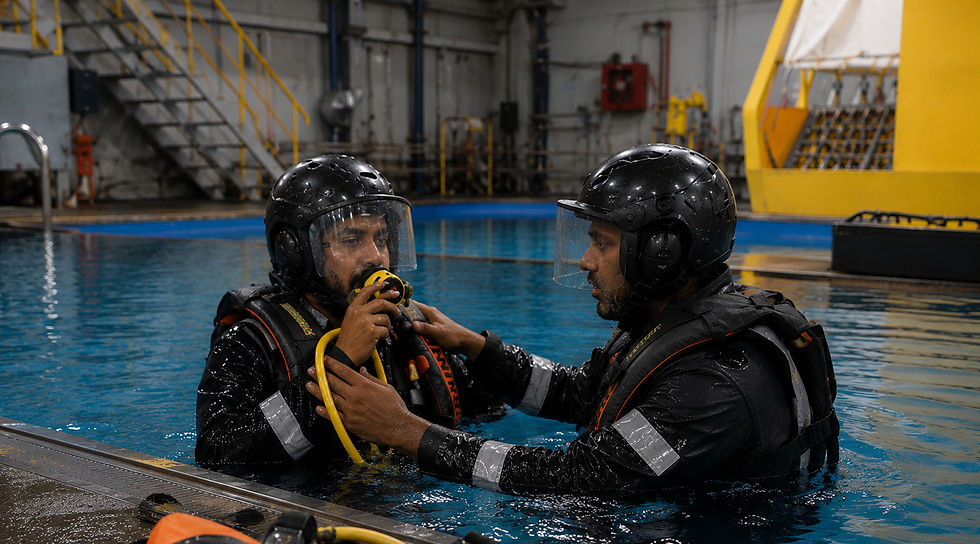
Training includes:
Equipment familiarization
Breathing procedures
Emergency deployment
Practical escape exercises
Because operator requirements vary, workers should always confirm which certification is required before booking a course.
Suraksha Marine offers both options to ensure compliance with employer expectations.
Understanding OPITO and Why It Matters
When researching offshore safety training, you will frequently encounter the term OPITO.
OPITO is the global skills and workforce development organization for the energy industry.
Its standards are recognized internationally and help ensure consistency in offshore safety training.
Choosing an OPITO-approved training provider offers several advantages:
International recognition
Industry acceptance
Standardized training quality
Employer confidence
Global mobility opportunities
For offshore workers seeking careers in India and abroad, OPITO certification can significantly enhance employment prospects.
Understanding OPITO Wrapper Products
In addition to standard BOSIET certification, some offshore operators require supplementary training known as Wrapper Products.
These programs allow employers to customize training requirements based on specific operational needs.
Wrapper Products may address:
Regional operating conditions
Specialized equipment
Company-specific procedures
Additional emergency systems
Enhanced helicopter safety requirements
For example, personnel working across multiple offshore regions may require additional training beyond standard BOSIET certification.
These supplementary programs help ensure workers remain compliant with operator-specific standards.
What Is Tropical BOSIET (T-BOSIET)?
Tropical BOSIET (T-BOSIET) is a specialized version of BOSIET designed for personnel working in tropical offshore environments.
The course includes the same core modules:
Safety Induction
Sea Survival and Emergency First Aid
Firefighting and Self-Rescue
Helicopter Safety and Escape
However, training scenarios are adapted to reflect conditions commonly encountered in tropical regions.
This makes T-BOSIET particularly relevant for offshore operations in:
India
Southeast Asia
Middle East tropical regions
Africa's tropical offshore sectors
Many offshore employers operating in tropical environments prefer or require Tropical BOSIET certification.
What Is Digital-Delivery BOSIET?
Technology is transforming the way offshore training is delivered.
To improve accessibility and flexibility, many training providers now offer Digital-Delivery BOSIET programs.
These courses allow participants to complete selected theoretical components online before attending practical sessions at an approved training center.
Digital-Delivery BOSIET Benefits include:
Flexible learning schedules
Reduced classroom time
Improved accessibility
Enhanced learner preparation
Efficient training delivery
Practical exercises and assessments remain mandatory and must be completed in person.
Digital delivery combines convenience with the rigorous practical training required for offshore safety competence.
How Long Is BOSIET Certification Valid?
BOSIET serves as the initial offshore safety qualification for personnel entering the offshore industry.
To maintain competence, workers are generally required to complete Further Offshore Emergency Training (FOET).
FOET acts as a refresher course and helps personnel maintain critical emergency response skills.
Under standard OPITO requirements:
BOSIET is completed initially.
FOET is typically completed every four years.
However, workers should always verify requirements with their employer because specific operators may have additional standards.
Maintaining valid certification is essential for uninterrupted offshore employment.
Career Benefits of Completing BOSIET
Beyond compliance, BOSIET offers significant career advantages.
Benefits include:
Increased Employability
Many offshore employers require BOSIET before considering candidates for deployment.
International Recognition
OPITO-approved certification is recognized across global offshore industries.
Improved Safety Awareness
Workers gain practical knowledge that can help prevent accidents and injuries.
Greater Confidence
Hands-on emergency training helps personnel feel prepared for offshore challenges.
Career Advancement
Many offshore career pathways begin with BOSIET certification.
For individuals seeking long-term careers in offshore energy, BOSIET is often the first major professional investment.
The Bigger Industry Picture
India's offshore sector is entering a period of sustained growth and transformation.
Investments in:
Offshore oil production
Natural gas development
Deepwater exploration
Offshore wind energy
Marine infrastructure
are creating new opportunities for skilled professionals.
However, technical expertise alone is no longer sufficient.
Employers increasingly prioritize workers who demonstrate strong safety awareness and emergency preparedness.
BOSIET remains one of the most effective ways to develop these competencies.
As offshore operations become more advanced and geographically diverse, safety training will continue to play a central role in workforce development.
The Real Value of BOSIET
The true value of BOSIET extends far beyond obtaining a certificate.
It lies in the practical experience gained through realistic emergency simulations.
Participants learn how to respond to situations such as:
Helicopter ditching
Underwater escape
Fire emergencies
Liferaft evacuation
Sea survival scenarios
Emergency first aid situations
These experiences build confidence that cannot be achieved through classroom learning alone.
When emergencies occur offshore, preparation matters.
BOSIET provides workers with the opportunity to practice critical skills in a controlled environment before they are needed in real life.
That preparation can make a significant difference during high-pressure situations.
Start Your Offshore Career with the Right Training
If you are planning a career in offshore oil and gas, offshore wind, marine operations, or energy infrastructure, BOSIET is one of the most important qualifications you can obtain.
It provides the knowledge, practical skills, and confidence needed to work safely in challenging offshore environments while meeting employer and industry requirements.
Suraksha Marine offers multiple OPITO-approved offshore safety training pathways, including:
BOSIET with EBS
BOSIET with CA-EBS
Tropical BOSIET (T-BOSIET)
Digital-Delivery BOSIET Programs
FOET Refresher Training
Whether you are entering the offshore industry for the first time or renewing your qualifications, choosing the right training provider is essential for your professional development and safety.

BOSIET Is the First Step Toward Offshore Readiness
BOSIET is not just a course. It is a worker's first serious preparation for offshore reality.
It teaches the safety language of the offshore industry. It introduces hazards and emergency procedures. It builds helicopter travel confidence through realistic, controlled exposure. It critically gives workers practical and realistic experience of offshore emergencies.
It helps employers mobilise personnel with greater confidence. And it strengthens one of the most important safety barriers in any offshore operation: trained human behaviour.
For India, the timing matters more than ever. Offshore oil and gas remains critical infrastructure. Offshore wind is emerging as a major growth sector. Marine and subsea work are expanding. The country needs offshore workers who are not only technically capable, but safety-ready — workers who know what to do in the first critical moments of an emergency, before any rescue team arrives.
That readiness begins before the first helicopter flight. It begins with training.
Suraksha Marine helps offshore workers, contractors, HSE teams, and energy companies build that readiness through OPITO offshore safety training designed for real-world offshore conditions in India.
Training Enquiries
Phone: +91 99873 00771 / +91 98192 12260
Email: surakshaweb@gmail.com
Website: www.surakshaweb.com
Explore Suraksha Marine's OPITO-approved offshore safety training programs and take the first step toward becoming a confident, competent, and deployment-ready offshore professional.

Comments